
- The SEC has provided more clarity on tokenised securities.
- Existing laws all still apply.
- Tokenisation is becoming increasingly popular among the world’s largest financiers.
The US Securities and Exchange Commission provided fresh guidance on Wednesday, confirming that its rules still apply to tokenised versions of traditional securities, regardless of how they’re issued.
Tokenisation is the process of converting ownership rights in assets such as real estate, stocks, or bonds into digital tokens on a blockchain.
Proponents argue that doing so will speed up finance, reduce costs, and provide greater accountability.
Despite assets such as tokenised versions of publicly traded stocks operating on different technology from their traditional counterparts, registration, reporting, disclosure, and anti-fraud rules still apply.
“The format in which a security is issued or the methods by which holders are recorded (e.g., onchain vs. offchain) does not affect application of the federal securities laws,” the SEC said in a statement.
In essence, tokenised securities are regulated as securities first, technology second.
The clarity should reassure securities issuers and asset managers, and could encourage more of them to experiment and issue tokenised versions of securities.
Tokenisation is becoming increasingly popular among the world’s largest financiers.
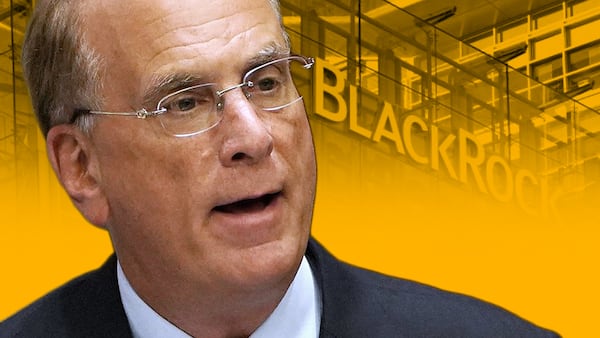
Speaking at the World Economic Forum in Davos earlier this month, BlackRock CEO Larry Fink said tokenising the financial system was “necessary,” and would reduce corruption and democratise finance.
Tokenised stocks
The SEC’s statement also sheds light on the structures that can be used to tokenise securities, which is critical information for investors.
The SEC classifies tokenised securities into two types: those sponsored by the issuer and those sponsored and issued by a third party.
Even if a token sponsored by a third-party isn’t tied directly to the underlying security and doesn’t give the holder any equity, voting, information, or other rights, it must still abide by the SEC’s securities rules.
The guidance, however, does not address regulatory uncertainty surrounding the secondary market trading of tokenised securities.
Some issuers have already launched tokenised securities — namely, tokenised versions of publicly traded stocks — outside the US.
Trading platform Robinhood has already launched tokens representing more than 2,000 US-listed stocks in Europe under the bloc’s Markets in Crypto-Assets Regulation, called MiCA.
Vlad Tenev, the firm’s CEO, has championed the tokenisation of stocks, arguing in a Wednesday X post that they could have prevented the trading halts his company was forced into during the January 2021 GameStop stock short squeeze.
Adoption hurdles
Yet in the US, adoption hurdles still remain.
First and foremost is the Clarity Act, a broad crypto-market-structure bill currently passing through the US Senate that should further reduce uncertainty surrounding tokenised assets.
The bill was previously expected to become law before the end of 2025. It faced more delays earlier this month after Coinbase CEO Brian Armstrong said his exchange would not support it.
Armstrong argued that certain provisions would enable a “de facto ban on tokenised equities” and would give the government unlimited access to crypto users’ financial records.
“We’d rather have no bill than a bad bill,” Armstrong said in a social media post on January 14.
Tim Craig is DL News’ Edinburgh-based DeFi Correspondent. Reach out with tips at tim@dlnews.com.