

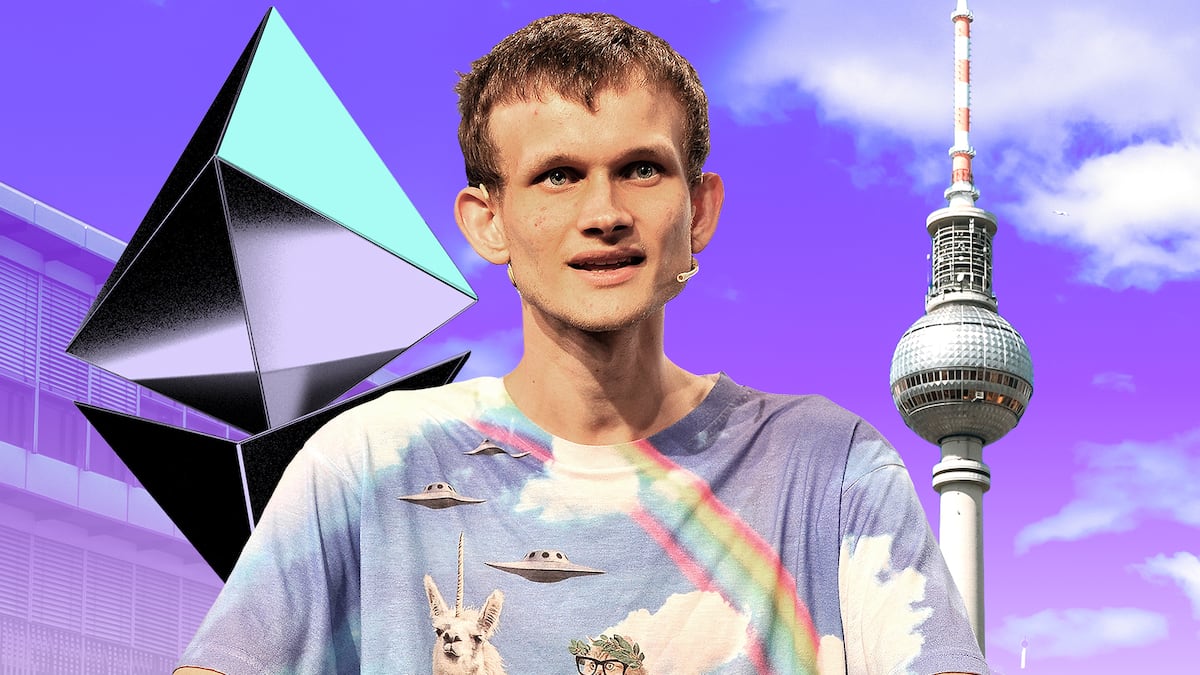
- Ethereum no longer needs layer 2s like before, Buterin argues.
- The layer-1 blockchain is already scaling faster than anyone predicted.
Ethereum is entering a new phase of scaling, and its relationship with layer-2 networks like Arbitrum, Optimism, and Base must be rewritten.
That’s the message from Vitalik Buterin, the $275 billion blockchain’s co-founder, who says layer 2s have been too slow to achieve maturity while Ethereum’s own base layer is scaling faster than expected.
“This vision no longer makes sense,” Buterin said of layer 2 networks acting as “branded shards” of Ethereum.
“Ethereum itself is now scaling directly on layer 1, with large planned increases to its gas limit this year and the years ahead,” he said.
Buterin’s rethink comes as the network’s token price has plunged nearly 30% over the past month.
Ether is now down 54% from its all-time high and well below its 2021 levels.
Shards?
Layer 2s were originally seen as extra lanes on Ethereum’s main highway, allowing more activity while maintaining the same security and rules.
Over the years, as activity on Ethereum increased, so too did transaction costs.
The more transactions that occur — be it simple trading, lending, or other onchain activities — the more expensive it becomes for users to interact with the network, not unlike paying a higher toll on a freeway as traffic mounts.
Over time, many systems built to help Ethereum scale became more like separate roads connected by bridges, relying on extra trust or control, argued Buterin.
Many popular layer 2 networks, such as Arbitrum or Base, are not fully decentralised.
Arbitrum, for instance, uses a centralised sequencer, a technical component that batches user transactions, which is controlled by Arbitrum’s developer team, Offchain Labs.
Equally, Coinbase, the crypto exchange and creator of Base, also controls the Base network’s sequencer.
These concerns are less of a problem, however, as the Ethereum network is scaling rapidly in its own right. Instead, Buterin proposes that layer 2 networks can simply offer different features while Ethereum remains the core.
“We can think of layer 2s as being a full spectrum,” he said.
Solution
Some chains will be tightly secured by Ethereum with strong guarantees. Others will sit looser, optimised for specific use cases. Users and applications decide how much they care about each connection, based on their needs.
In that world, layer 2s must offer more than generic scaling.
Buterin points to privacy-focused virtual machines, application-specific efficiency, ultra-low latency sequencing, non-financial designs for social or identity use cases, and even built-in oracles or dispute resolution.
If a layer 2 network uses ETH or Ethereum-issued assets, Buterin argues, it should still reach at least stage one decentralisation, or as he describes it, “limited training wheels.”
Anything less is effectively a separate layer 1 that should use a bridge.
“Layer 1 itself is scaling, fees are very low, and gas limits are projected to increase greatly in 2026,” Buterin said.
“Our job should be to make it clear to users what guarantees they have, and to build up the strongest Ethereum that we can.”
Crypto market movers
- Bitcoin is down 3.4% over the past 24 hours, trading at $76,063.
- Ethereum is down 2.4% past 24 hours at $2,267.
What we’re reading
- What is Moltbook? Memecoin tied to AI bot forum crashes 75% after X hype — DL News
- Elon Musk’s xAi dives into crypto, tradfi amid $1tn merger with SpaceX — DL News
- Hyperliquid Prepares Prediction-Style Markets With HIP-4 Upgrade — Unchained
- The ABCD investing framework — Milk Road
- Bitcoin price to $10,000 as markets barrel towards crash ‘reminiscent of 2008,’ Bloomberg analyst warns — DL News
Lance Datskoluo is DL News’ Europe-based markets correspondent. Got a tip? Email him at lance@dlnews.com.